

Tension!
A gallerist on sustainability and what really sells. Plus: Mendini in London, DesignTO event picks, and more.

Hello friends!
I hope it’s been a refreshing start to the new year for all of you. Although I haven't seen the sun for 3 weeks, I am feeling good and energised, and I hope you are too.
January marks the start of the design fair season that will last until July, starting with Maison&Objet’s winter edition aligned with Deco Off, a city-wide tour of fabric showrooms. If you’re heading to Paris, don’t forget to check out one of the best exhibitions in recent memory, Minimal at La Bourse de Commerce. It’s outstanding and closes next week.
Speaking of Maison&Objet, our subject of this newsletter is Ariane van Dievoet, whom I first met over 10 years ago when she was interning for the Brooklyn-based design studio Bower. She’s now back in her home city of Brussels, where she runs a design studio and gallery, both focused on sustainable design.
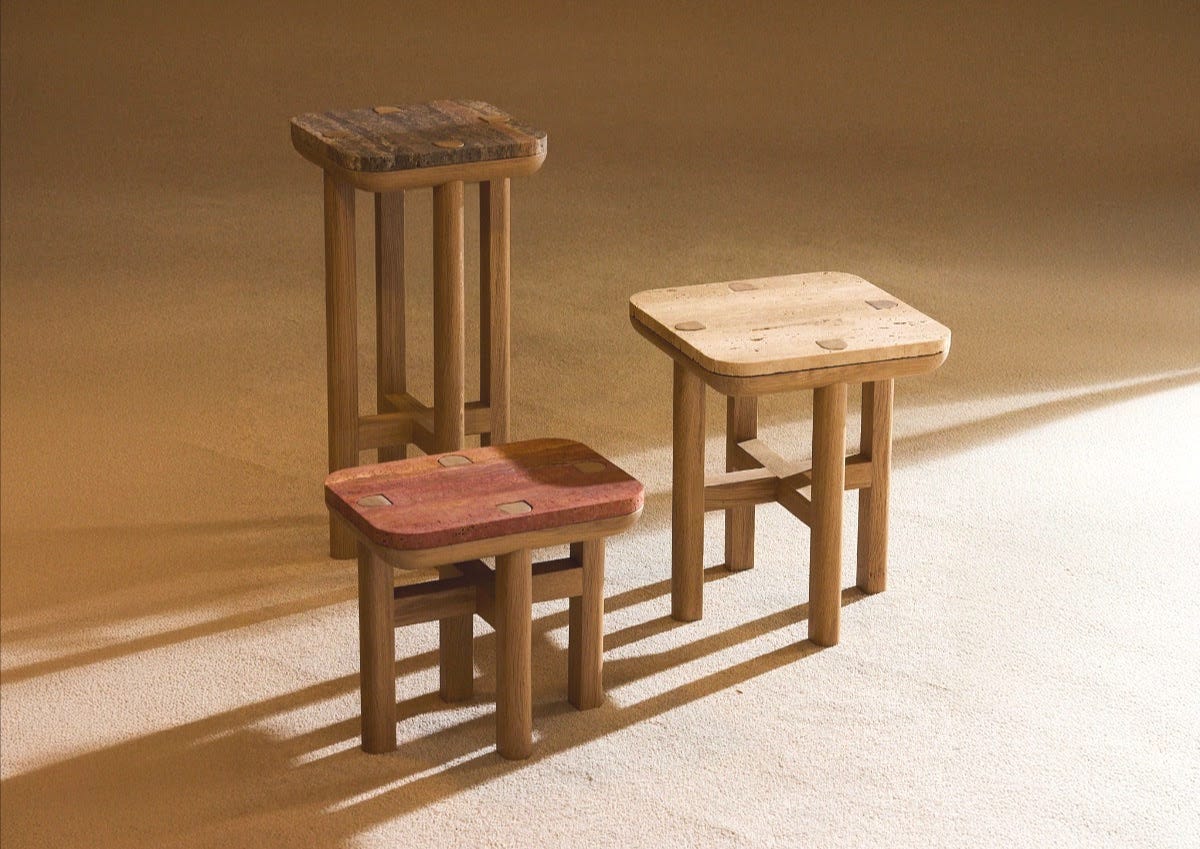
As an aside - Ariane will be at Maison&Objet presenting in Belgium is Design, which will be a fantastic section. You can find that exhibition in Hall 3 Decor & Design, Stand D84/E83.
But back to the topic at hand:
A through-line of my writing and interest in our wonderful world of design is the tension that runs through the industry. My career took off around the time “collectible design,” as both a term and a practice, began expanding beyond the walls of Design Miami’s twice-yearly shows, roughly coinciding with the launch of Collectible Fair in 2018. I explored this evolution in a curated exhibition at Collectible’s 2021 fair titled Tension!, which looked at the move away from strict functionality, and toward furniture that is experienced more like art: distant, and often less tactile, prompting the familiar question, “can I touch it?”
There’s also ongoing tension around whether “collectible design” is even the right term, as the category continues to expand, especially in its most emerging forms. We’ll revisit this question (among others) next month with the design historian, curator, and advisor Daniella Ohad.
And finally (and there are more, but we don’t have all day), there’s the tension around whether a gallery can help a designer succeed.
A few years ago, many designers told me their ultimate goal was to be represented by a gallery. When it happened, for some, that representation brought credibility, confidence, and institutional recognition. For others, it brought disappointment: their work didn’t sell, and when it did, it earned less than they expected.
That tension becomes especially pronounced when the designer–gallery relationship collapses into a single role. The two positions aren’t as naturally aligned as expected, and often pull in opposite directions.
This philosophical clash shows up repeatedly in how Ariane talks about her work: wanting to show process and research while running a gallery, loving pieces she knows won’t sell, and treating sustainability as an ethos rather than a marketing tool.
Keep reading for our interview with Ariane below. And for our VIP subscribers: a Q&A on what sells, the Brussels design scene, and what makes a designer attractive to represent.
In This Issue
News News News 🗞️
Exhibition of the Month 🤌
Festival of the Month 🍁
TDR Interview: Ariane van Dievoet ♻️
News (and good reads)
Leo and I are proud of our Leibal newsletter! Here we showcase the top four interiors from the past 12 months on the platform, as well as thoughts on what should have been 2025’s color of the year. Leibal Substack
Paris Moves to Protect Its Café and Bistro Heritage with UNESCO Bid. Departing Now
Alessandro Mendini comes to London! A solo show of one of post-war Italy’s brilliant designers is on view at the Estorick Collection. Opening Jan 16. TDR
Sandow acquires Architonic. Ya know… one of the founders helped us conceptualize TDR in the very early days. A big congrats to them. BOH
“Boston Hotel Roasted for Using A.I.-Generated ‘Warhol’ Portraits as Decor.” Good. artnet
White Lotus heads to where I wish I were heading to: St Tropez. Hypebeast
Train travel is now the luxury set’s favorite mode of transportation. Mine too, but that’s because I’ll do anything to avoid an airport. NYT
Exhibition of the Month: From the Upper Valley in the Foothills
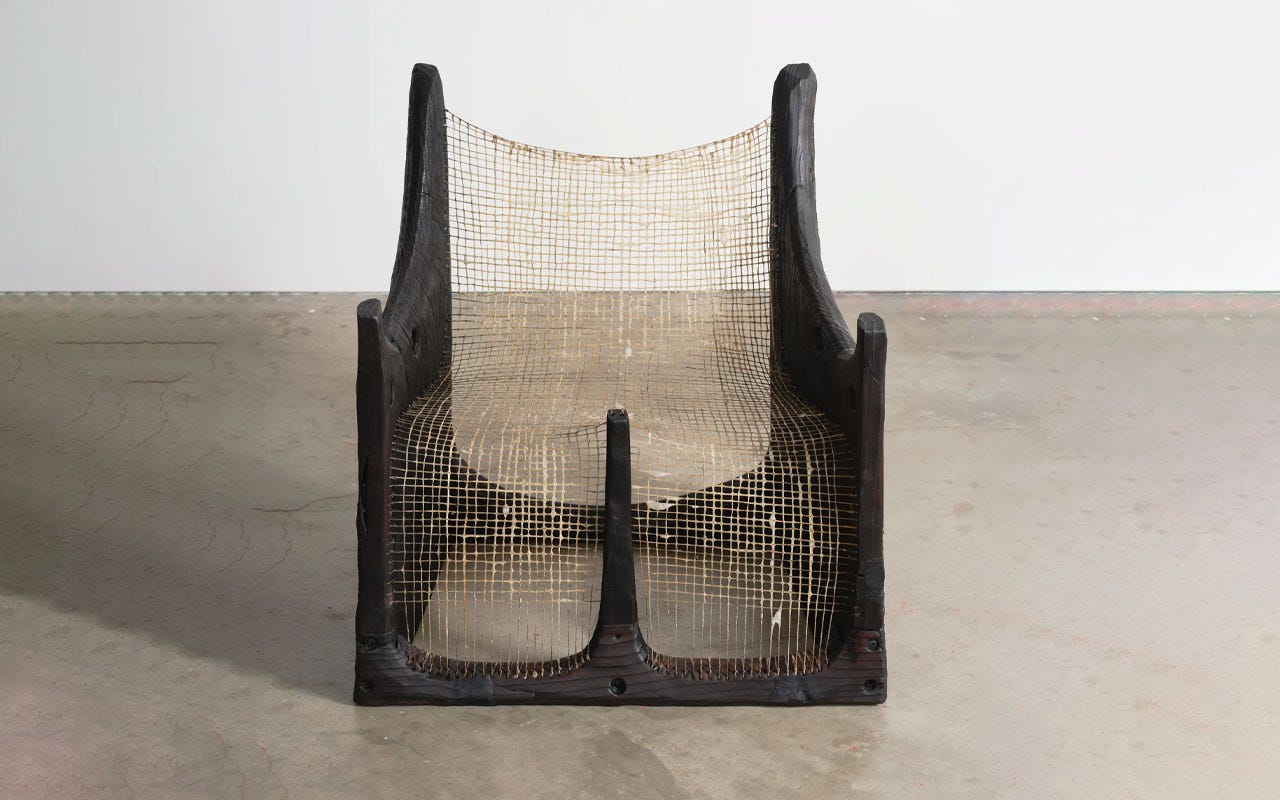
On January 7, 2024, the Eaton Fire broke out in the San Gabriel Mountains, burning for twenty-five days, taking nineteen lives, and destroying more than nine thousand structures, making it the second most destructive wildfire in California’s history. At the same time, the Palisades Fire raged to the west, claiming twelve lives and nearly seven thousand structures over thirty-one days, becoming the most destructive wildfire in the history of the City of Los Angeles.
In response to these events and their lasting impact on land and community, Marta, together with co-organizer Vince Skelly and material partner Angel City Lumber, presents a group exhibition that honors loss, resilience, and the regenerative potential of wood. Working with salvaged trees cleared from Altadena, the area most affected by the Eaton Fire, two dozen artists have transformed species native to the region into functional works intended as sites of rest and contemplation. Installed organically throughout Marta’s Silver Lake gallery so visitors move among the pieces as they would through a forest, the exhibition marks the one-year anniversary of the fires as both a collective act of remembrance and a gesture toward renewal.
On view in LA until January 31, 2026
More information here
Festival of the Month: DesignTO
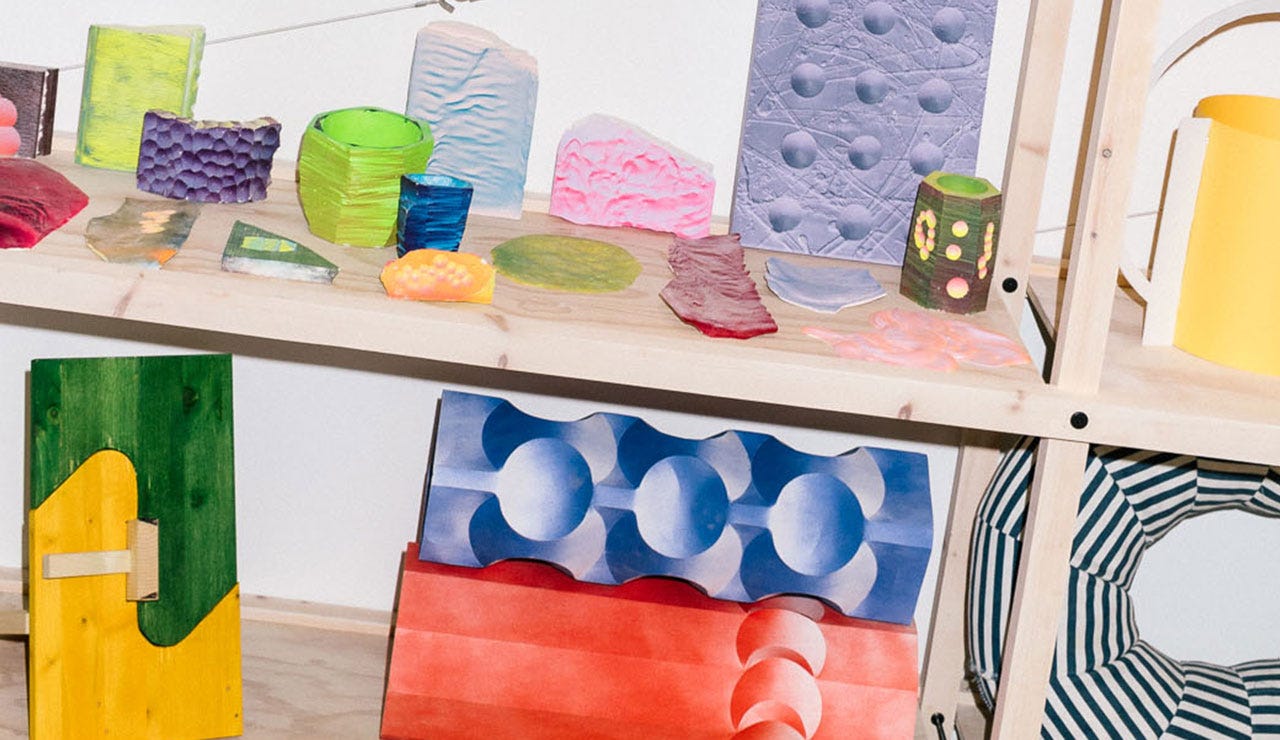
Our friends at DesignTO are back at it, organizing another excellent design festival in Toronto from January 23 to February 1. If you’re in town or local, here’s where we’d make a point to visit.
Jan 22 – Feb 27: Air Assemblies
Jan 23: DesignTO Launch Party (tickets here)
Jan 23 – 24: NORM AT MJÖLK
Jan 24 – 25: Life Drawing Workshop with FOR SCALE (tickets here)
Jan 30 2026: STUDIO SESSION: JAMIE WOLFOND
The full schedule can be found here.
The Tension of Being Both:
Ariane van Dievoet on Designing & Running a Gallery
Ariane van Dievoet began her design practice in 2014, when she launched her studio AVANDI in Brooklyn. She was interested in quality and longevity, an approach that shaped both her material choices and her production decisions. While based in New York, she made a point of prototyping locally and manufacturing in the United States.
Reclaimed materials were present from the beginning, though not as a formalized strategy. Leather scraps from her internship at Bower became the base material for a series of brass objects. Stone offcuts were used for small side tables. Packaging was also treated as part of the design process, with attention paid to reuse and recyclability rather than convenience.
The question of sustainability became more urgent after she relocated to Brussels in 2018. The move marked a reset of her practice and clarified several priorities. She wanted a more direct relationship with fabrication and to spend more time in the workshop. She also no longer wanted to contribute to what she describes as the excessive consumption of raw materials. At the same time, working on interior architecture projects exposed her to the scale of material waste generated on construction sites.
What one person discarded as scrap, I saw as potential design elements.
- Ariane van Dievoet
That realization pushed her toward self-prototyping and experimentation with reclaimed materials. She joined a shared workshop in Brussels and began working primarily with materials sourced from construction sites or production waste. Local, ethically sourced wood became part of her material palette as well, allowing her to produce larger furniture pieces when needed. The process was slower and less predictable, but it aligned with how she wanted to work.
Before founding Augusta Gallery, visibility was a persistent challenge. Like many designers running independent studios, Ariane relied heavily on fairs, group exhibitions, and markets to be seen. The system emphasized novelty and frequent new releases. Promoting long-lasting designs while being expected to produce new collections each season felt contradictory.
That question eventually led to the creation of Augusta, a gallery she co-founded with her sister. Rather than focusing exclusively on her own work, Ariane wanted to create a collective exhibition space that could present a range of approaches to high-end sustainable design. Representing multiple designers felt like a way to increase both visibility and impact.
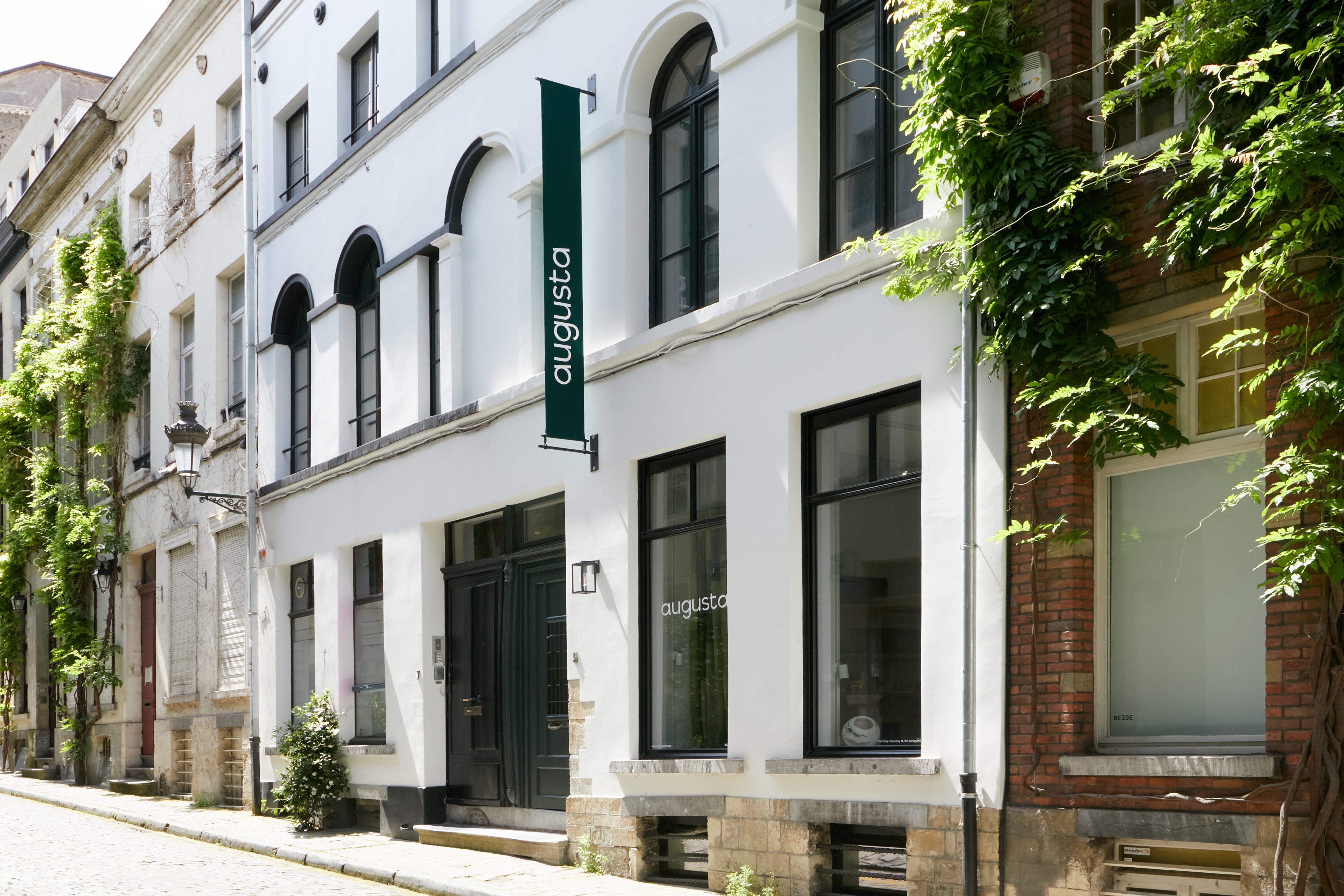
Research was another motivation. The gallery allowed her to stay closely connected to emerging practices, sustainable processes, and new materials. It also created an environment for collaboration, where designers could learn from one another and develop work in conversation rather than isolation.
A gap was also becoming clear. While there was growing interest in zero-waste and eco-conscious products across many sectors, and a growing number of designers working with reclaimed or bio-based materials, but few galleries in Belgium were making sustainability a central focus. Augusta was conceived as a space that would both exhibit and sell high-end sustainable design.
Defining sustainability was essential. From the beginning, Augusta focused on material-driven practices, reclaimed and bio-based materials and designers whose work is shaped by their relationship to those materials. The gallery has remained focused on designers based in Belgium, with plans to expand to Europe more broadly. However, shipping work long distances, Ariane notes, can quickly undermine the intent.
The gallery’s first exhibition included work by six designers, each focused on a limited material palette and its specific properties. Fabric scraps were transformed into large-scale hangings. Sea salt became the basis for furniture, objects, and lighting. Damaged clothing was felted into wall pieces and interior objects. Ariane also presented a sculptural collaboration developed with ironworker Didier Henry, using brass scraps combined with reclaimed stone, wood, or brass bases.
Across these practices, imperfections were not hidden. Material inconsistencies were part of the final outcome.
Running a gallery as a designer has shaped how Ariane approaches representation. She sees the designer’s perspective as a defining part of the gallery’s identity. Her goal is to give designers as much freedom as possible while maintaining a clear artistic direction for each exhibition.
TDR: How has being a gallerist changed your approach as a designer?
AvD: Being a curator has made me understand the importance of timing and research when you approach a gallery or any business you want to work with.
Knowing what they stand for and contacting them at a convenient time (not in the middle of a big fair) can make all the difference.
Working directly with collectors has also adjusted her perspective. Seeing how buyers respond to work provides insights that designers often miss when they remain focused solely on production.
The biggest tension between the two roles emerges around process. Ariane would like to show more research and experimentation, but as an independent gallery, Augusta must prioritize work that visitors can imagine using in their own spaces.
Sometimes I wish I could show the process more, as well as the research, but we’re an independent gallery, not a funded art space. Our objective is to show pieces that our customers can imagine in their space and use right away. Some designers’ work really interests me in terms of their process, but their finished products don’t (yet) meet the gallery’s aesthetics or quality standards. I keep a “designers to watch” tab and check on them periodically to see how their work evolves. I have a similar tab open for sustainable materials that haven’t found a practical use yet.
That’s where sustainability, taste, and economics start becoming a negotiation.
